Tips
April 15, 2026
7 Warning Signs Your Septic System Needs Attention
Septic problems rarely happen overnight. Catch these seven early warning signs and you can usually fix a small issue before it becomes a big one.
April 15, 2026
Two properties a mile apart in Central Texas can need completely different septic systems. One has deep, well drained soil and five acres to work with. The other sits on shallow clay over rock with a wet weather creek running through the back. Same county, same rainfall, often the same builder, and the right answer is not the same for both.
That surprises a lot of homeowners. Choosing a septic system is not about picking the best one off a list. It is about matching a system to the ground it has to live in and the household it has to serve. Here is how we walk through that decision with folks across Central Texas, in plain English and without a sales pitch.
Before anyone talks about tanks or prices, we look at dirt. Your land decides more about this project than your budget does, and learning that early is a lot cheaper than learning it later.
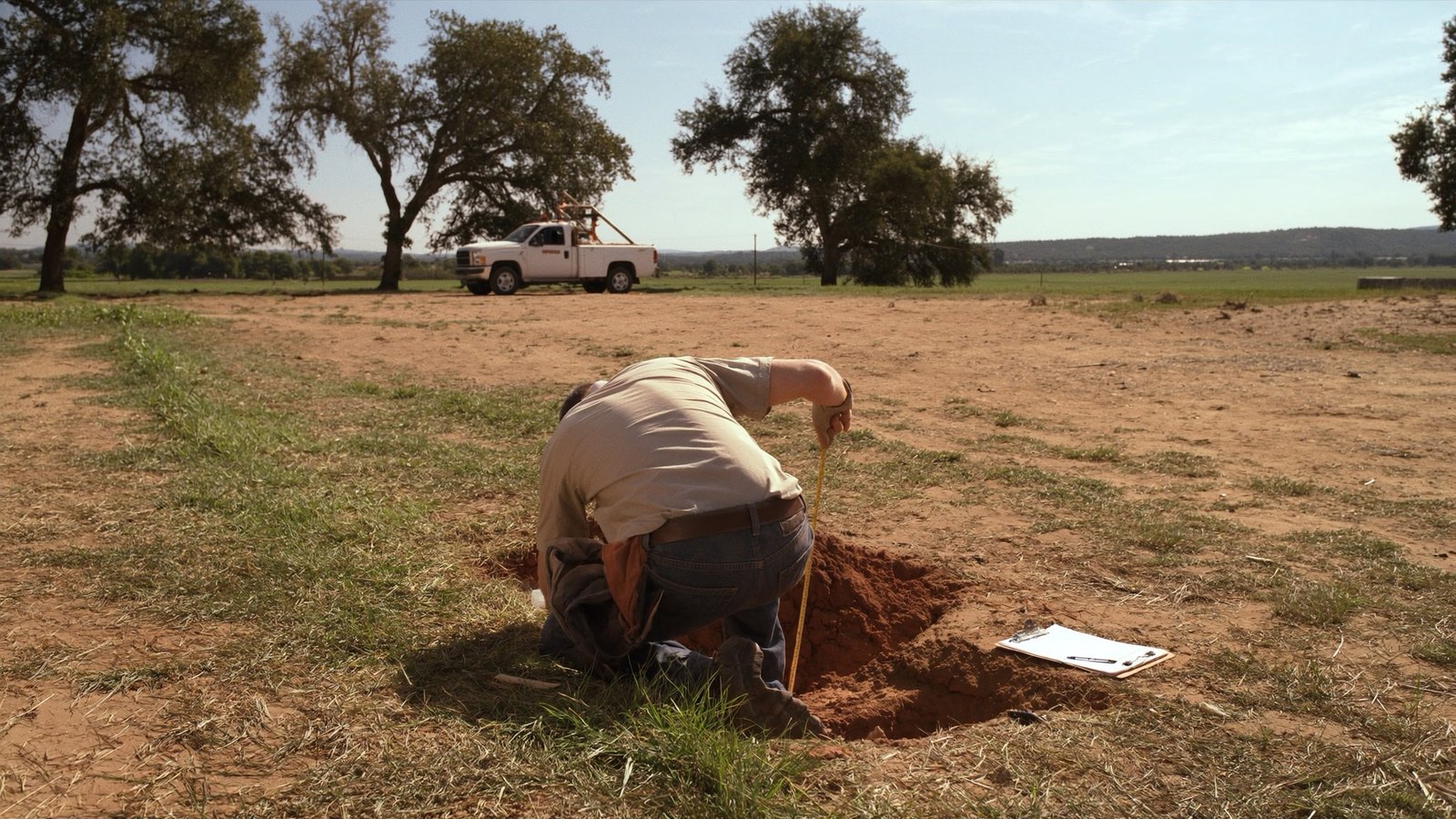
Sandy loam takes water quickly. Heavy clay holds onto it. A percolation test tells us how long water takes to drop an inch in a test hole, and that one number drives almost everything downstream. Soil that drains well can support a conventional drain field on a modest footprint. Slow clay needs either a much larger field or a system that treats water more thoroughly before it ever reaches the soil.
Around Mart, Waco, and the country in between, we see a lot of that heavy clay. It is good for holding a stock tank and hard on a drain field.
A drain field cannot go just anywhere you would like it. It has to keep its distance from the house, the property line, the water well, any pond or creek, and usually the driveway and any future building site. On five open acres that is easy. On a one acre lot that already has a well and a barn, the usable area shrinks in a hurry, and that alone can rule out a conventional field before cost ever comes up.
Ground that stays soggy for weeks after a wet spring is telling you something. If the water table sits close to the surface, or the whole lot drains toward one low corner, a conventional field in that spot will fight you every winter. We would rather find that out with a shovel than a year after the install.
A conventional system has two parts: a tank and a drain field. Waste settles in the tank, solids stay behind, and the liquid flows out into perforated pipe laid in gravel trenches. The soil does the final treatment. There is no electricity, no pump, and no moving parts buried in your yard.
If your soil drains well and you have room for a full sized field, conventional is usually the better deal. It costs less up front, it costs almost nothing to run, and there is very little on it to break. Pump it on schedule, keep heavy equipment and deep rooted trees off the field, and a well built conventional system will outlast most of what else is on the property.
An aerobic system adds oxygen to the treatment process with an air pump, which lets bacteria break waste down far more completely. The treated water then goes out through spray heads across the lawn instead of soaking into a buried trench. Because the water leaving the system is much cleaner, it needs a lot less soil to finish the job.
Tight lots. Heavy clay. Shallow soil over rock. A high water table. A property where the only open ground left sits too close to the well. Any one of those can push you toward aerobic, and a good number of newer Central Texas builds require one outright.
Aerobic systems cost more to install, they run on electricity, and they need routine maintenance on a set schedule. None of that is a reason to avoid one. It is a reason to know what you are signing up for before any concrete goes in the ground.
The cheapest system is the one that actually fits your land. Anything else you end up paying for twice.
Once the system type is settled, the size has to match the household. This is where we see the most expensive mistakes, and they go in both directions.
A tank that is too small does not give solids enough time to settle before liquid moves on. Those solids end up in the drain field, and a clogged field is one of the costliest repairs in this trade. Saving a few hundred dollars at install is not worth that trade.
Going bigger than you need does not buy you much. You pay more for the tank, more for the excavation, and more for the field, and the system does not run any better for it. We size to bedrooms, real occupancy, water habits, whether there is a garbage disposal, and whether you plan to add on later.
Septic installs in Central Texas require permits and inspections, and the requirements are not identical in every county. Site evaluation, setback approval, and final inspection all have to line up before a system is legal to use. Doing it out of order, or skipping a step, turns into a real problem at resale.
We handle that paperwork as part of the job. You should not have to learn county code to get a working septic system.
Our process is simple. We come look at your land. We talk about how many people live in the house and how you actually use water. We tell you what your soil will and will not support. Then we give you an honest recommendation and a free, no pressure estimate.
If a conventional system will serve you fine, we say so, even though an aerobic install is the bigger ticket. Straight answers are how you stay in business for 27 years in a place where everybody knows everybody.
Tim, Lois, and our crew have been putting septic systems in Central Texas ground for over 27 years. Whether you are building new, replacing a failed system, or just trying to work out what your property can handle, call us at (254) 744-5856 and we will come take a look.
more news

View All
From new installs to fast repairs, Tim and Lois Rhodes keep Central Texas flowing. Get an honest, no pressure estimate today. We come out, look at your land and your system, and tell you plainly what it needs and what it will cost. No call center, no upselling, and no charge for the estimate.
Get an Estimate

When Your System Gets Crusty, Call Dusty
Mon - Fri 8am - 8pm
Office: 254-744-5419
Sat - Sun
24/7 Service: 254-744-5384
© Dusty Rhodes Septic & More LLC. All rights reserved. Designed by Cedarsphere.