
Septic Pumping and Sludge Testing
About the Service
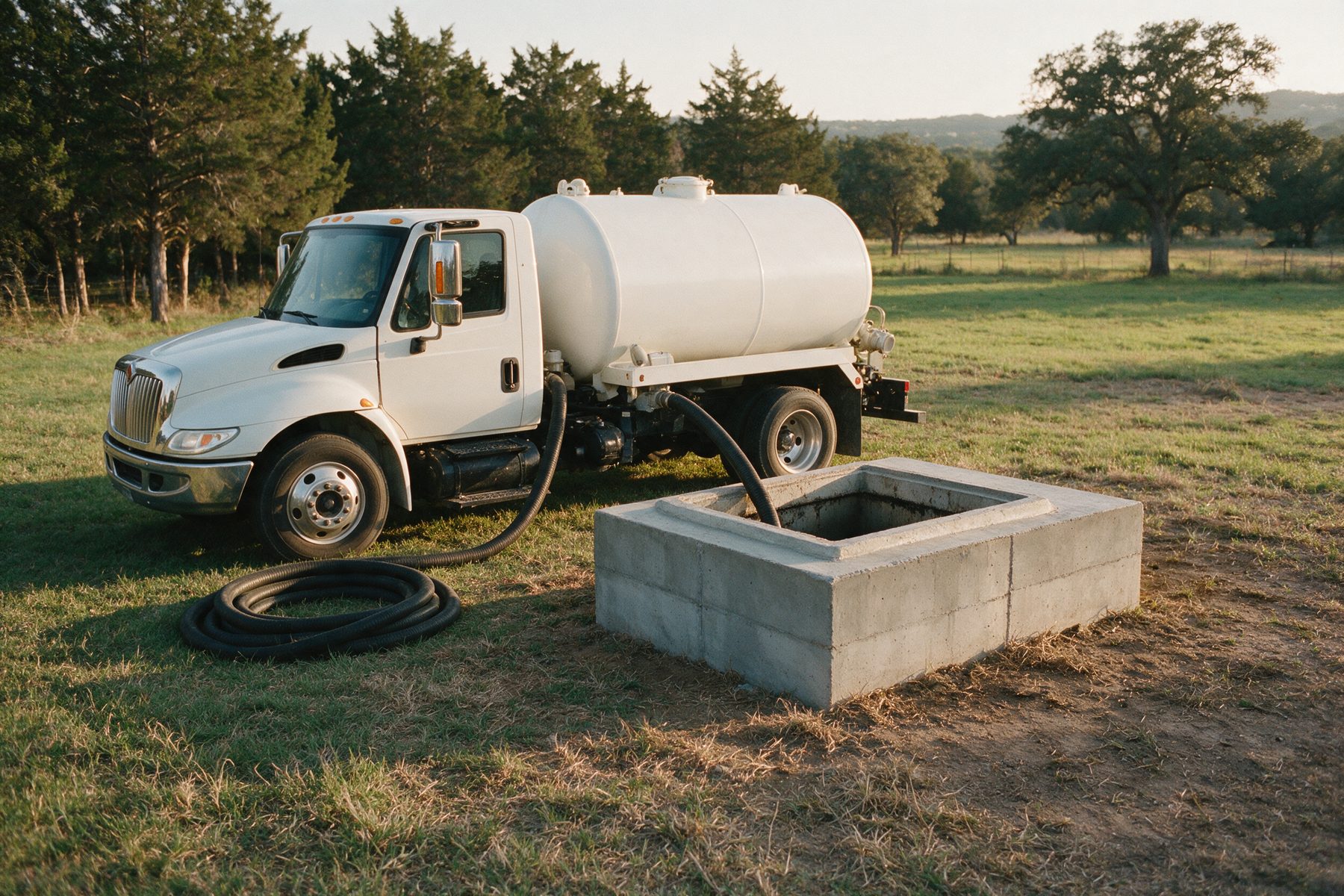
Regular pumping keeps your septic system running clean and prevents costly failures. We pump your tank, test the sludge level, and let you know exactly when it needs service next. Most Central Texas homes need pumping every three to five years, and we help you stay on schedule so you are never caught off guard. While the tank is empty we inspect the baffles, the inlet, and the outlet, because problems that are obvious in an empty tank are invisible in a full one. You get a clear report of what we found, an honest interval for next time, and no pressure to buy anything you do not need.
Why Pumping Is the Cheapest Thing You Will Ever Do
A septic tank works by letting solids settle to the bottom and grease float to the top, so that only the relatively clear liquid in the middle flows out to the drain field. As sludge builds, that middle layer gets thinner. Eventually solids start washing out with the liquid and into the drain field trenches, and once soil is clogged with solids it does not recover.
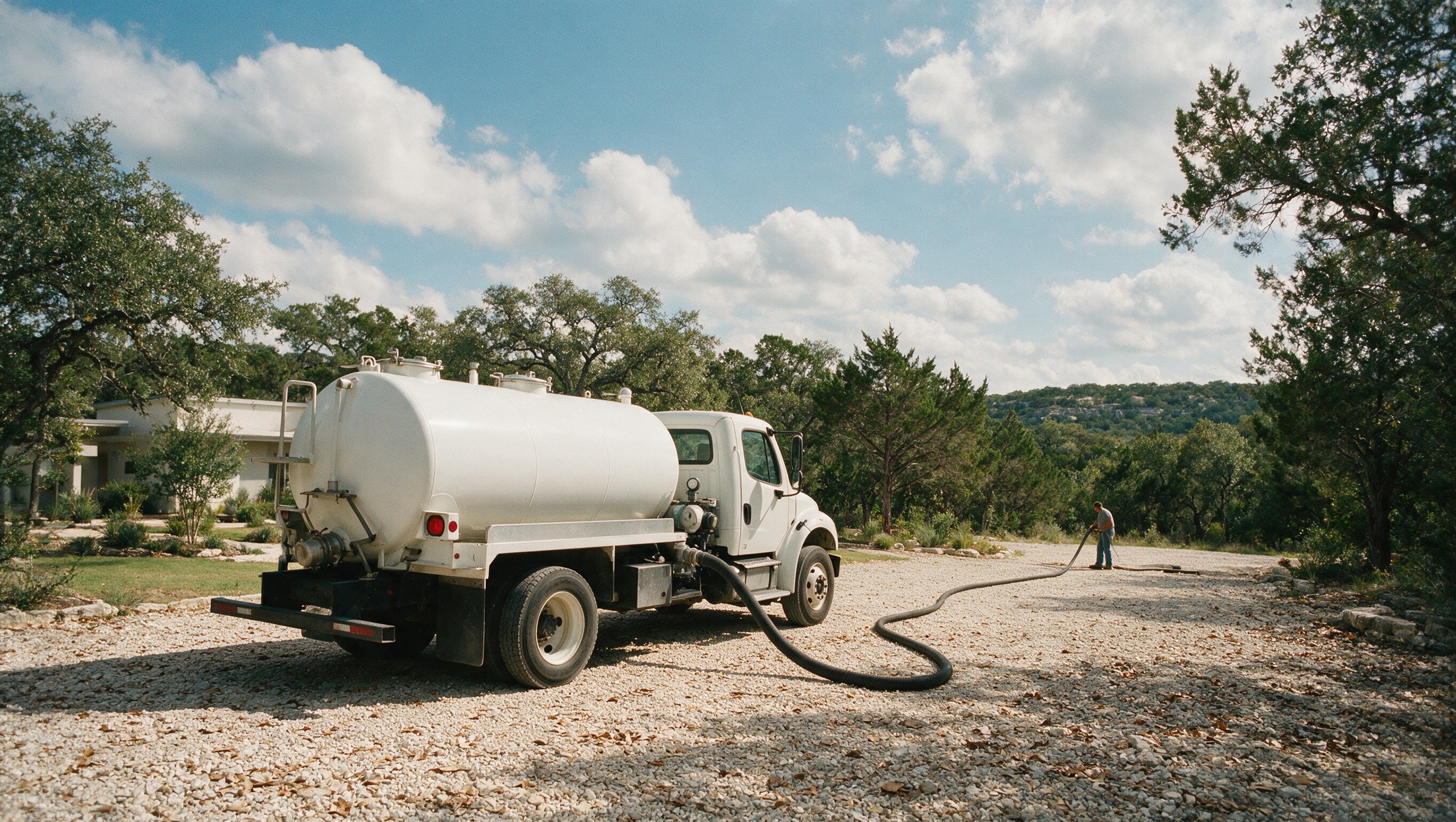
That is the whole argument for staying on schedule. Pumping is a service call. A failed drain field is excavation, new trenches, new gravel, and a yard that has to be put back together.
How Often You Actually Need It
Three to five years covers most Central Texas households. If you want one number, use four. What moves you inside that range:
- Tank size. A 1,000 gallon tank fills far faster than a 1,500 gallon tank serving the same house.
- How many people live there. Going from two occupants to four roughly halves your interval.
- Water habits. Long showers, heavy laundry days, and a running toilet all push liquid through faster than solids can settle.
- Garbage disposals. Regular use can nearly double the solids entering the tank.
- Age and condition. Worn baffles let more material escape between pumpings.
Sludge Testing Beats Guessing
Rather than pumping on a fixed calendar and hoping it is right, we measure. We check the sludge and scum layers, which tells us exactly how full your tank is and how quickly it fills for your household. That gives you a real interval instead of a rule of thumb, and it usually saves money over the long run because you stop paying to pump a tank that was not ready.
Pumping is the cheapest thing you will ever do for your septic system. A drain field replacement is one of the most expensive.
What a Service Visit Includes
Locating and Opening
We find and uncover the lids. If your system does not have risers, this is the part that involves digging, and it is also the best argument for adding them.
Measuring Before We Pump
We check sludge and scum depths first, because that reading is what tells us your real schedule.
Pumping the Tank Down
The tank gets pumped out completely, not skimmed. A partial pump leaves the sludge layer that caused the problem in the first place.
Inspecting While It Is Empty
Baffles, inlet, outlet, and tank walls get looked at while everything is visible. This is where we catch small problems worth fixing now.
Telling You What We Found
You get a plain report and a recommended date for next time. If everything looks good, we say so.
Signs You Are Already Overdue
Slow drains across the whole house, gurgling pipes, odors near the tank lid or over the field, soggy ground, or a bright green stripe of grass where the trenches run. Any of those means stop waiting on the calendar.
What Helps Between Visits
Fix running toilets and dripping faucets. Spread laundry across the week instead of six loads on Saturday. Keep grease, wipes, and paper towels out of the drains regardless of what the packaging claims. Keep vehicles, trailers, and livestock off the drain field. Together those habits can add a year or more between service calls.
Not Sure When It Was Last Done?
Then it is probably time. Call Tim, Lois, and the crew at (254) 744-5856. We pump and inspect tanks across Mart, Waco, and all of Central Texas, and the estimate is free.
FAQs
What Septic Services Do You Offer?

We install, repair, pump, and replace septic systems across Central Texas. We also handle land clearing, driveways, demo and haul off, plus tractor, skid steer, and excavator work.
How Often Should I Pump My Septic Tank?
Most Central Texas households need pumping every three to five years. Size, usage, and system type change that, so we test the sludge level and tell you straight.
How Do I Know If My Septic System Needs Repair?
Slow drains, foul odors, gurgling pipes, or wet spots in the yard are common signs. Call early and we can often fix small issues before they get expensive.
What Areas Do You Serve?
We serve Mart and the surrounding Central Texas communities. If you are nearby, give us a call and we will let you know.
Ready to Get Your Septic Sorted?
From new installs to fast repairs, Tim and Lois Rhodes keep Central Texas flowing. Get an honest, no pressure estimate today. We come out, look at your land and your system, and tell you plainly what it needs and what it will cost. No call center, no upselling, and no charge for the estimate.

