
Septic System Installation
About the Service
Building new or replacing an old system? We design and install septic systems sized for your property, soil, and household. From conventional tanks to aerobic setups, we handle permits, digging, and setup so your system works right from day one. Every install starts with a look at your land, because soil type and lot size decide as much about the system as your budget does. We size the tank and the field to how your household actually lives, pull the permits, coordinate the inspections, and put the yard back together when we are done. Serving Mart and all of Central Texas with dependable, code compliant installs and a free estimate before any work starts.
What a Proper Install Looks Like
A septic system is buried the day it goes in and then expected to work quietly for decades. That only happens if the work underneath is done right the first time. Here is how we approach every install across Central Texas.
Site Evaluation
We start with the ground. Soil type, percolation rate, lot size, slope, the location of your well, and how the property drains after a wet week all shape what can go in and where. We would rather spend a morning with a shovel than build a system that fights your land for the next twenty years.
Design and Sizing
Next we size the system to the household, not to a generic table. Bedrooms, real occupancy, water habits, whether there is a garbage disposal, and whether you plan to add on later all factor in. Undersized systems fail early. Oversized systems just cost more without working better.
Permits and Approvals
Central Texas installs require permits and inspections, and the requirements are not identical from one county to the next. We handle the paperwork, the site evaluation submission, and the inspection scheduling so your system is legal and documented. That matters at resale more than most people expect.
Excavation and Setting the Tank
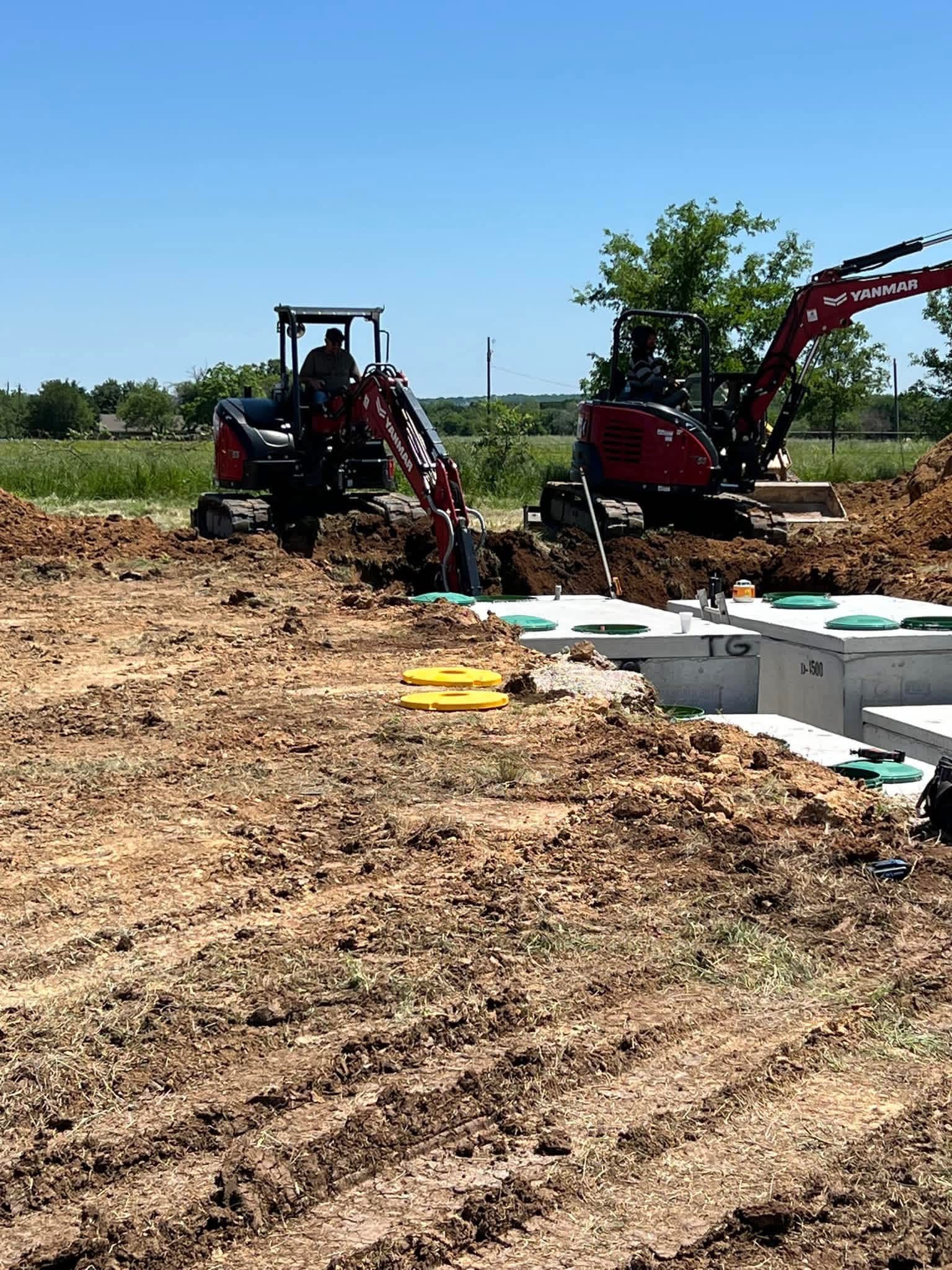
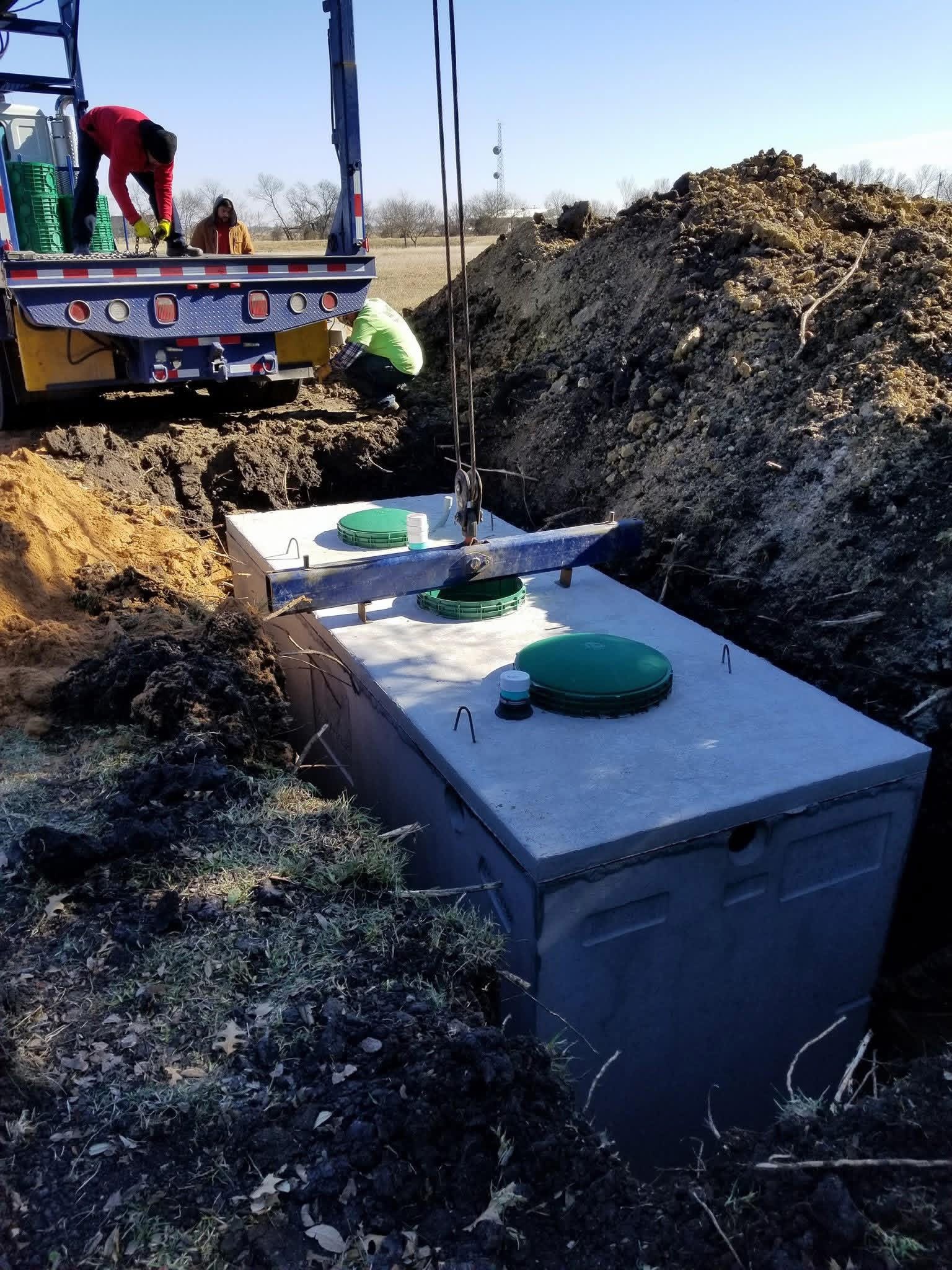
We excavate to grade, set the tank level on a properly prepared base, and seal every connection. A tank that settles unevenly puts stress on the inlet and outlet lines, and that is a repair nobody wants to pay for two years in.
Drain Field or Spray Field
Trenches get cut to the right depth and slope, gravel is placed to spec, and pipe is laid straight and level. On aerobic systems we set the control panel, run the electrical, and position spray heads so treated water is distributed evenly instead of pooling in one corner of the yard.
Inspection and Cleanup
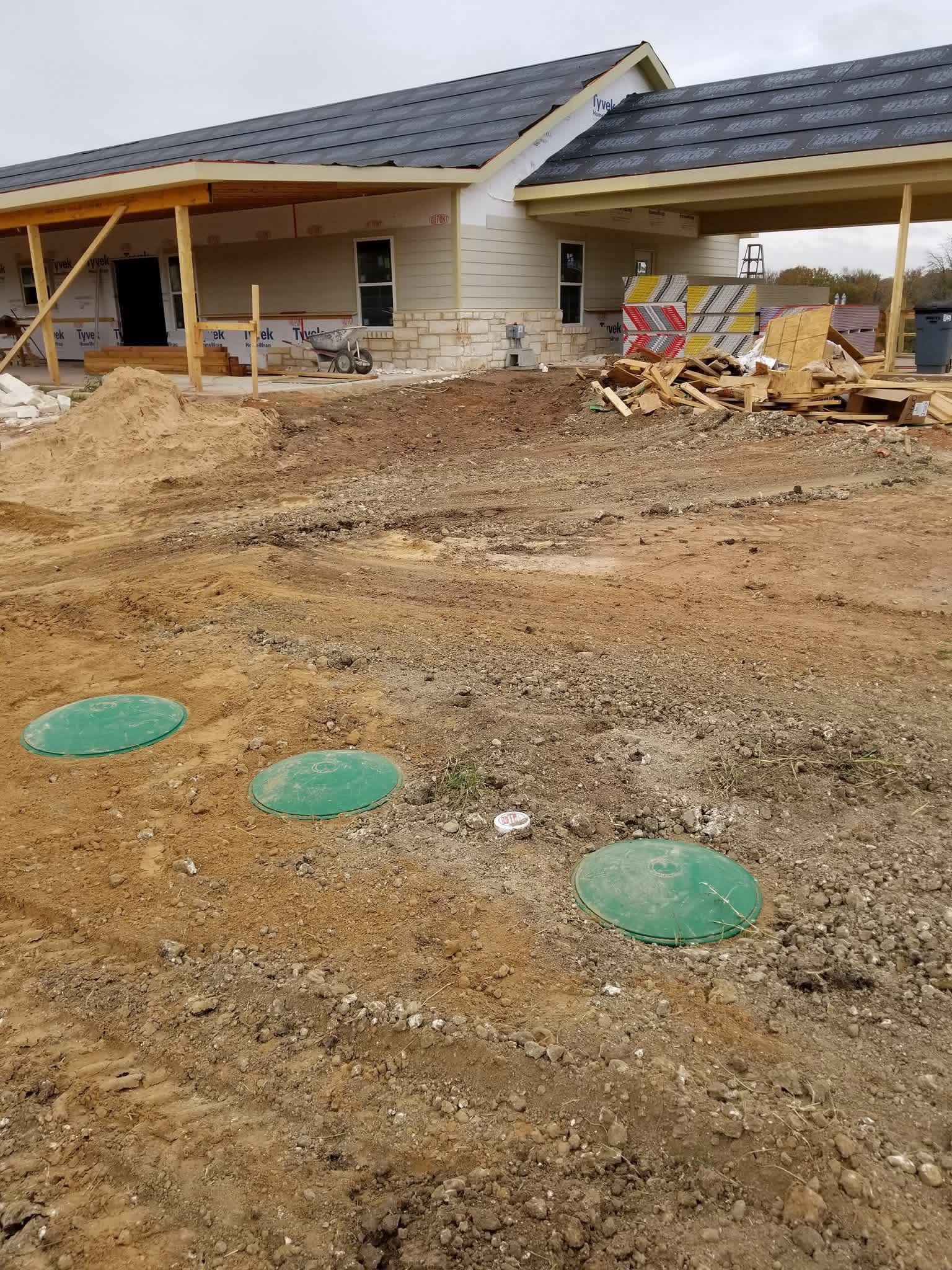
Final inspection, backfill, and grading. We put the site back in shape and walk you through what you now own, where the lids are, and what the maintenance schedule looks like.
Conventional or Aerobic?
Both are good systems. Which one is right depends almost entirely on your soil and your available space.
- Conventional systems cost less to install, use no electricity, and have almost nothing to break. They need well draining soil and enough room for a full sized field.
- Aerobic systems treat waste far more completely, which means they need much less soil to finish the job. They suit tight lots, heavy clay, shallow soil over rock, and high water tables.
- Aerobic systems run on power and require routine maintenance on a set schedule. That is worth knowing before you decide, not after.
We would rather talk you into the cheaper system that fits your land than sell you the expensive one that does not.
What Affects the Cost
No two installs price the same, and anyone who quotes you over the phone without seeing the property is guessing. The real drivers are system type, tank size, how much excavation the site needs, how far the tank sits from the house, soil conditions, and permit fees for your county. Access matters too. A wide open pasture is a very different job from a tight backyard with a fence line to work around.
How Long It Takes
Most residential installs are a two to three day job once permits are in hand, plus inspection time. Permitting timelines vary by county, so the calendar usually depends more on paperwork than on digging. We will give you a realistic window up front instead of an optimistic one.
Why Homeowners Call Us
Tim, Lois, and our crew have been installing septic systems in Central Texas soil for over 27 years. We know what this ground does in a wet spring and what it does in August. You get a straight recommendation, a clear estimate, and a crew that cleans up after itself.
Call (254) 744-5856 for a free, no pressure estimate and we will come look at your property.
FAQs
What Septic Services Do You Offer?

We install, repair, pump, and replace septic systems across Central Texas. We also handle land clearing, driveways, demo and haul off, plus tractor, skid steer, and excavator work.
How Often Should I Pump My Septic Tank?
Most Central Texas households need pumping every three to five years. Size, usage, and system type change that, so we test the sludge level and tell you straight.
How Do I Know If My Septic System Needs Repair?
Slow drains, foul odors, gurgling pipes, or wet spots in the yard are common signs. Call early and we can often fix small issues before they get expensive.
What Areas Do You Serve?
We serve Mart and the surrounding Central Texas communities. If you are nearby, give us a call and we will let you know.
Ready to Get Your Septic Sorted?
From new installs to fast repairs, Tim and Lois Rhodes keep Central Texas flowing. Get an honest, no pressure estimate today. We come out, look at your land and your system, and tell you plainly what it needs and what it will cost. No call center, no upselling, and no charge for the estimate.

